/CGLUX (Definitivo)-13.png)
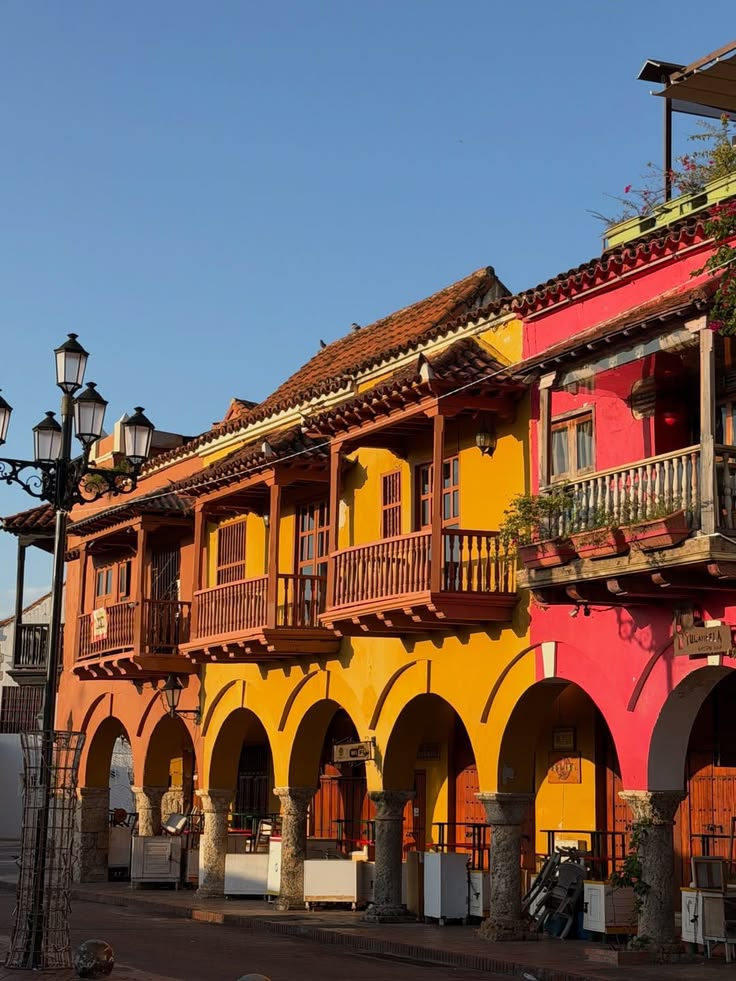
Cartagena's walled city reveals itself in layers. The first layer is what every visitor sees within an hour of arriving: the colorful facades along Calle del Santísimo, the rose-draped balconies of El Centro, the Cathedral dome visible from nearly every vantage point in the old town. It is immediately beautiful, and immediately crowded.
But the city has a second layer — one that most people walk past without knowing it exists. Behind the decorated street-facing walls lies an entire interior world of hidden courtyards, private gardens, and architectural spaces that represent some of the finest colonial design anywhere in the Americas. These are the spaces where Cartagena actually lives, and where it most completely reveals its character.
How to Read a Cartagena Courtyard
The courtyard — or patio — was the organizing principle of colonial Spanish architecture in the New World. Every significant residence, convent, and public building in the walled city was designed around a central open-air space: a place for air circulation in the Caribbean heat, for the sound of water, for the management of light and shadow through the long tropical day.
What makes Cartagena's courtyards distinctive is the hybridization that occurred over four centuries. The Spanish grid was modified by African spatial sensibilities, adapted to the local climate, and eventually overlaid with Republican-era embellishments that added iron railings, ceramic tile work, and elaborate staircases to spaces that were originally more austere. The result is a domestic architecture unlike anything else in the Caribbean.
"Behind the decorated street-facing walls lies an entire interior world — where Cartagena actually lives, and where it most completely reveals its character."
The key to entering this world is knowing what to look for. A heavy wooden door, slightly ajar. A glimpse of green through a keyhole. A fountain sound audible from the pavement. These are the signals. Most of these spaces are accessible — through hotel lobbies, restaurant entrances, converted mansions — if you know which doors to try.
Five Neighborhoods Worth Getting Lost In
The walled city divides into distinct neighborhoods, each with its own character and its own hidden inventory:
- El Centro — the formal heart of the old town, where the grandest mansions sit behind the most impenetrable facades. The courtyards here tend toward the palatial: double-height stone archways, mature mango trees, and the layered silence of spaces that have held four centuries of history.
- San Diego — lighter, more residential, with smaller courtyards that feel more intimate. This is where boutique hotels have taken over former family homes most successfully, and where the relationship between interior garden and colonial architecture is at its most harmonious.
- Getsemaní — just outside the walls, this formerly working-class neighborhood is now the city's most creatively alive quarter. Its courtyards are smaller and less formal, often filled with music, street art, and the kind of life that the more polished old town has largely traded away.
- La Merced — the former convent district, where the largest interior spaces in the city survive. The cloisters of several former religious institutions have been repurposed as hotels, event spaces, and cultural centers, and they represent the grandest scale of colonial courtyard architecture in Cartagena.
- El Cabrero — outside the old town but worth the short walk. A leafy Republican-era neighborhood of early 20th-century mansions with wide verandas and garden walls draped in bougainvillea. The pace here is entirely different.
The Architecture of Color
Cartagena's famous color palette — the ochres, cobalts, deep terracottas, and faded greens of its facades — was not always this vivid. The original colonial buildings were largely whitewashed or unpainted. The explosion of color came later, partly through the influence of Caribbean and African traditions, partly through the 20th-century tourism industry, and partly through the simple logic of tropical maintenance: bright paint hides damage, repels heat, and refreshes quickly.
Inside the courtyards, color functions differently. Here it is more considered: the deep blue of a tiled fountain surround, the pale yellow of a plastered wall catching afternoon light, the dark green of a mature matarratón tree against whitewash. The interior palette is quieter than the exterior, and more revealing of how people actually live inside these spaces.
The balconies deserve their own attention. The wooden-bracketed balcony — balcón de madera — draped in flowering plants is one of Cartagena's most recognizable images, but up close each one is different: the age of the wood, the species of flower, the objects placed on it by the family or business within. These are not decorations; they are windows into the rhythms of the building.
What a Private Guide Changes
The difference between exploring Cartagena's interior spaces independently and doing so with a knowledgeable local guide is difficult to overstate. The city's most significant courtyards are not signposted. Many are accessible only through introductions — a conversation with a hotel manager, a relationship with a family that has occupied the same building for generations, a guide who knows which restaurant conceals a 17th-century courtyard behind its dining room.
A private guide also changes the pace. The instinct, without guidance, is to move — to follow the map, to cover the plazas, to accumulate sights. Cartagena's interior architecture rewards the opposite: the willingness to sit in a courtyard for twenty minutes, to watch how the light moves, to let the city come to you rather than pursuing it.
When to Explore
The old town is most beautiful — and most accessible — in the two hours after dawn and the two hours before sunset. The heat is manageable, the light is golden, and the streets have not yet filled with the midday tourist current.
For the courtyards specifically, morning is best. Hotel courtyards are accessible through breakfast; former convent spaces are quietest before noon; residential courtyards that double as café terraces are open but unhurried in the early hours. By 11am, the character of the city has shifted. By 2pm, it has largely retreated indoors to wait for the afternoon to pass.
The city you find at 7am — its shutters open, its residents walking to the market, its courtyards still cool from the night — is a different Cartagena from the one most visitors experience. It is worth the early start.
/CGLUX (Definitivo)-12.png)